Category: Buying Guides

  • Custom Street Signs for Corporate and Industrial Campuses: A Facility Manager’s Playbook

    Custom Street Signs for Corporate and Industrial Campuses: A Facility Manager’s Playbook

    Published November 16, 2026. Last updated November 16, 2026.

    Corporate and industrial campuses need custom street signs that work as one system: named internal drives, stop signs at every internal intersection, truck and visitor wayfinding, and clear parking signs. Get Custom Street Signs helps facility managers plan all four from one approved design, with a free mockup in 24 hours and about 2 weeks standard turnaround.
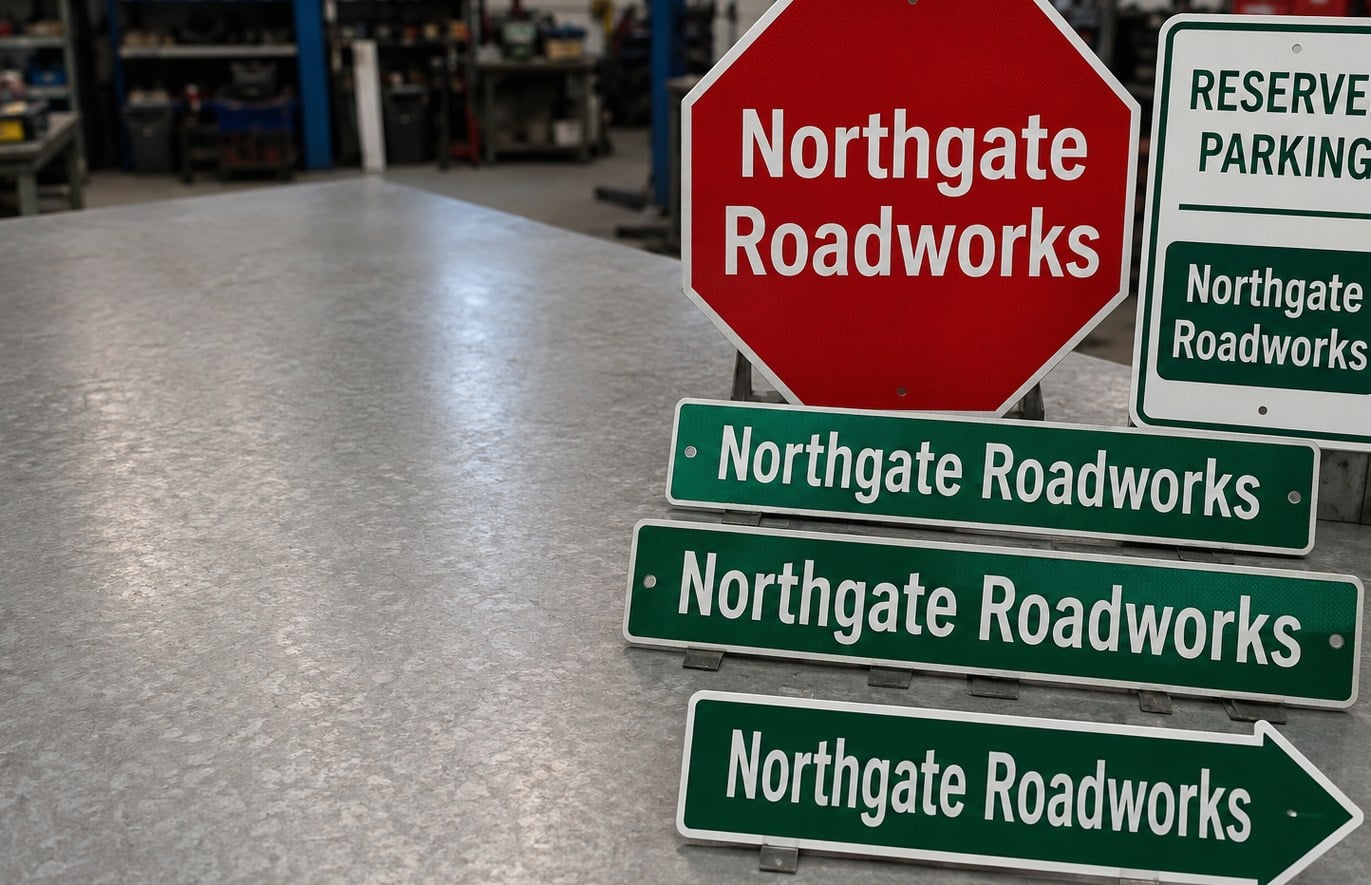
    Custom Street Signs for Corporate and Industrial Campuses: A Facility Manager's Playbook - custom printed street signs from Get Custom Street Signs
    Custom street signs with a logo, produced by Get Custom Street Signs.
    Key facts
    • Plan street name blades, stop signs, wayfinding and parking signs as one campus program.
    • Name internal drives to match the site map, security desk and courier addresses.
    • Free mockup within 24 hours, unlimited revisions, no payment until design approval.
    • Standard turnaround is about 2 weeks after approval, with express shipping available.

    What street signs does a corporate or industrial campus actually need?

    A corporate or industrial campus usually needs four families of custom street signs: street name blades for internal drives, stop and regulatory signs at every internal intersection, wayfinding signs that send drivers to the right building or dock, and parking signs for visitors, staff, fleet and accessible spaces. Treating all four as one program keeps colors, lettering and reflectivity consistent from the front gate to the back fence.

    Private campus roads rarely get help from the city. Office parks, distribution centers, manufacturing plants, hospital campuses and research parks all depend on their own facilities team to name drives, mark turns and keep traffic moving. When signs are added one emergency at a time, the result is a mix of styles that drivers stop trusting.

    • Street name blades: name every internal drive so delivery drivers, contractors and emergency crews can find an address.
    • Stop and regulatory signs: control internal intersections, crosswalks and one-way loops.
    • Wayfinding and directional signs: route visitors, trucks and staff to different destinations.
    • Parking and reserved signs: separate visitor, staff, fleet, carpool and accessible spaces.

    How should a facility manager name the internal drives on a campus?

    Name internal drives the way a delivery driver or first responder would look for them: short, distinct names that match the site map, the security desk script and the addresses tenants give out. Custom street signs only work when the name on the blade is the same name dispatch, couriers and the front desk use, so settle the naming before anyone requests a quote.

    Many campuses start with informal labels like the back road or the truck lane. Those labels fail the first time a new employee or an outside contractor arrives. A better pattern gives every drive a real name and every building a number or letter that appears on the wayfinding signs.

    1. Pull the current site plan and list every drive, loop and service lane.
    2. Remove names that sound alike when spoken over a radio or phone.
    3. Confirm the final list with security, shipping and receiving, and the local fire department.
    4. Send the approved list to Get Custom Street Signs as a spreadsheet so each blade is produced from the same source.

    Names that match a theme, such as local landmarks or company history, are easy to remember and make the campus feel planned rather than improvised.
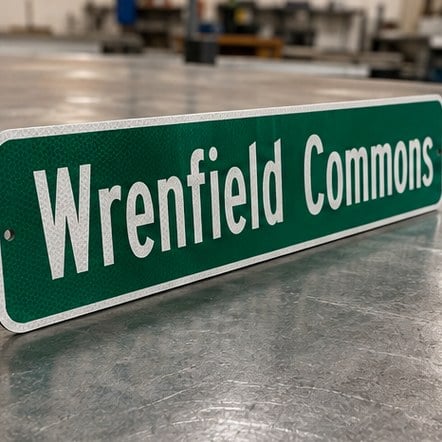
    Street Name Blades in Bulk - one of the custom street signs styles from Get Custom Street Signs
    Street Name Blades in Bulk.

    Which custom street signs matter most for truck traffic and loading docks?

    For truck traffic, the most important custom street signs are the ones a driver sees before committing to a turn: directional signs at the main gate, dock and receiving signs at each split, height or route warnings where you control them, and stop signs where trucks cross pedestrian or car traffic. A truck that misses a turn on a tight campus may need to back out, which is slow and risky.

    Place truck-facing signs earlier than you would for cars and keep the messages short. Drivers sit higher, travel with long trailers and need time to read, decide and signal. Large lettering, high-contrast colors and a reflective sheeting grade suited to night arrivals all help, especially at distribution sites that receive freight around the clock.

    • Put the dock or receiving destination on its own sign rather than squeezing it onto a visitor sign.
    • Repeat the destination at each decision point so drivers can confirm they are still on route.
    • Use double-sided street name blades where trucks approach from both directions.
    • Keep truck and visitor routes visually distinct so cars do not follow trucks to the docks.

    The wayfinding and directional signs page shows formats that work well for dock routing.

    How do you keep campus street signs consistent with the company brand?

    Keep campus street signs on brand by choosing one background color, one letter style and one logo placement for every street name blade, then applying the same rules to wayfinding and parking signs. Regulatory signs such as stop signs should keep their standard shape and color, while the surrounding custom street signs carry the company look.

    Brand guidelines are written for screens and print, not reflective sheeting viewed from a moving vehicle. A thin wordmark that looks elegant on a business card can disappear on a street name blade at dusk. Get Custom Street Signs shows the logo, color and lettering together on a free mockup within 24 hours, so the marketing team and the facilities team can agree before anything is produced.

    Sign familyWhat can carry the brandWhat should stay standard
    Street name bladesBackground color, logo or icon, borderClear, high-contrast lettering
    Wayfinding signsColor, logo, building naming styleArrows and short destination names
    Parking signsCompany name, color bandAccessible parking symbols and wording
    Stop and regulatory signsOptional small name panel where suitableShape, red background, white legend

    The logo street signs page covers emblem placement in more detail.

    How should parking signs be planned on a business or industrial campus?

    Plan campus parking signs by user group first, then by space. Most corporate and industrial sites separate visitor, staff, fleet, executive or reserved, carpool, electric vehicle and accessible parking, and each group needs a sign that drivers recognize at a glance. Ordering these custom signs with the street name blades keeps fonts and colors matched across the campus.

    Reserved and numbered spaces are where campuses lose track. A reorganization or a new tenant can change dozens of assignments overnight, and a mix of handwritten and printed signs quickly follows. A cleaner approach is a single parking sign layout with one variable field, such as a space number, department or fleet unit, so replacements look identical to the originals.

    • Map every lot and label each space type before requesting a quote.
    • Use one layout per space type and change only the variable text.
    • Keep accessible parking signs to the standard symbol and wording your local rules require.
    • Hold a few blank-field spares for reassignments.

    See parking and reserved signs in bulk for formats that support a different number or name on each sign in one run.

    How can a campus phase a sign replacement without disrupting operations?

    Phase a campus sign replacement in the order that protects safety and deliveries first: regulatory signs at internal intersections, then truck and dock wayfinding, then street name blades, and finally parking and building-level signs. Each phase can be a separate run of custom street signs built from the same approved design, so the campus stays consistent even when the budget is split.

    Facilities teams often install during quiet windows such as weekends, plant shutdowns or holiday weeks. Work backward from that window. Get Custom Street Signs returns a free mockup within 24 hours, offers unlimited free revisions and has a standard turnaround of about 2 weeks after approval, with faster turnaround available through express shipping. You pay nothing until you approve the design.

    1. Audit every existing sign and note its location, condition and message.
    2. Group signs into phases by safety priority and install window.
    3. Approve one master design that covers every sign family.
    4. Order each phase from that master so later batches match the first.
    5. Label boxes by zone or building so install crews can work quickly.

    What should a facilities team send to get an accurate campus sign quote?

    To get an accurate quote for custom street signs on a campus, send a sign list with every message and its quantity, the sign families you need, single-sided or double-sided for each blade, your preferred colors and logo file, the reflective grade you want if you know it, and your target install window. A marked-up site plan helps the team understand where each sign goes.

    Pricing for campus programs depends on the mix of sign types, the size of each sign, the sheeting grade, the number of faces and how many unique messages are in the run. Rather than guess, send what you have. Get Custom Street Signs can recommend sizes and grades and will return a mockup within 24 hours.

    • A spreadsheet with one row per sign, its message and its location.
    • Your logo in vector format, plus brand colors.
    • Notes on night use, truck traffic and any areas with heavy weather exposure.
    • Whether you need posts and brackets or are mounting to existing hardware.

    Start at the custom quote page or read how it works for the full process.

    Who should own the street sign program on a corporate campus?

    One named owner, usually the facilities or site services manager, should own the campus street sign program, with security, environmental health and safety, and marketing as reviewers. A single owner keeps the master sign list, the approved design and the replacement log, so custom street signs stay consistent as staff, tenants and buildings change.

    Without an owner, signs drift. A tenant orders its own parking sign, a contractor installs a temporary arrow that becomes permanent, and the next reorder has no reference. The owner does not need to approve every detail alone, but should collect feedback from each reviewer on the same mockup and sign off once.

    Keep the approved mockup and sign list with the facilities records. When a sign is hit by a forklift or a new building opens, the owner can request a matching replacement without restarting the design. Get Custom Street Signs keeps reorders simple because the approved artwork is already on file, and new street name blades or stop and regulatory signs can be added to the same standard.

    Frequently asked questions

    How many sign types does a distribution center campus usually combine in one order?

    A distribution center usually combines custom street signs from four families in one order: street name blades, stop and regulatory signs, dock and receiving wayfinding, and parking signs. Get Custom Street Signs can produce them together from one approved design, so colors and lettering match across the site. Ordering them as a single program also makes later replacements easier to match.

    Should internal campus drives have street names or numbers?

    Internal campus drives work best with custom street signs that use short, distinct names, while buildings and docks use numbers or letters. Names are easier to say over a radio and remember, and numbers make buildings easy to sequence. Whatever you choose, match the names on the signs to the site map, the security desk script and the addresses couriers receive.

    Can custom street signs help emergency responders find buildings on a large campus?

    Custom street signs help emergency responders on a large campus by giving every internal drive a visible, reflective name that matches the address dispatch receives. Pair the street name blades with building numbers and directional signs at each split. Share the final name list with your local fire department before ordering so their maps and your signs say the same thing.

    Where should dock directional signs be placed for incoming trucks?

    Dock directional signs should be placed before each decision point a truck driver faces, starting at the main gate and repeating at every split on the way to receiving. Custom street signs for trucks need large lettering and early placement because long vehicles need time to signal and turn. Keep dock routes visually separate from visitor routes to avoid confusion.

    Do campus street signs need reflective sheeting if the site is well lit?

    Campus street signs still benefit from reflective sheeting even on well-lit sites, because lights fail, glare hides signs and headlights are often the most reliable light at a gate or dock. Get Custom Street Signs can recommend a sheeting grade based on night traffic, truck arrivals and viewing distance, and the choice can be confirmed on the free mockup.

    Can a manufacturing plant order street signs that match its safety signage colors?

    A manufacturing plant can order custom street signs in background colors that complement its existing safety program, as long as regulatory signs keep their standard shape and colors. Get Custom Street Signs shows the proposed colors on a free mockup within 24 hours, so the environmental health and safety team can confirm nothing conflicts with existing hazard or floor markings.

    How should a campus handle signs for a temporary road closure during construction?

    Temporary closures on a campus are best handled with portable signs, while the permanent custom street signs stay in place or are covered briefly. Plan the permanent sign order around the final road layout, not the construction detour. Once the work is done, Get Custom Street Signs can produce any new street name blades or directional signs to match the approved campus design.

    Can one order cover street signs for several buildings with different departments?

    One order of custom street signs can cover several buildings and departments by using one master design with a variable field for each building name or number. Get Custom Street Signs produces each sign from the same approved layout, so the research building, the warehouse and the head office all look consistent while showing their own destination clearly.

    What is the best way to label street sign boxes for a multi-zone campus install?

    The best way to label boxes of custom street signs for a multi-zone campus is by install zone or building, matching the location column on your sign list. Install crews can then carry one box to one area and work without sorting. Ask Get Custom Street Signs to follow your zone names when packing so the boxes line up with your site plan.

    Should visitor and employee entrances use different wayfinding signs?

    Visitor and employee entrances should use custom wayfinding signs with different destinations but the same colors and lettering. Visitors need signs to reception and visitor parking, while employees need badge entrances, staff lots and shuttle stops. Keeping one visual style across both tells every driver they are on the same campus while sending each group to the right gate.

    How often should a facilities team audit campus street signs?

    A facilities team should audit campus street signs at least once a year and after any construction, reorganization or new building opening. Walk or drive each route at night as well as during the day to check reflectivity and placement. Note missing, damaged or outdated custom street signs on the master list so replacements can be reordered from the approved design.

    Get a free mockup for your street signs

    Send your logo or idea and the quantity you have in mind. Get Custom Street Signs returns a free mockup within 24 hours, you approve the design before anything is produced, and standard turnaround is about two weeks with faster options available. Get a custom quote.

  • First Custom Street Sign Order Mistakes and How to Avoid Them

    First Custom Street Sign Order Mistakes and How to Avoid Them

    Published November 9, 2026. Last updated November 9, 2026.

    The biggest mistakes on a first custom street sign order are an unverified name list, counting streets instead of post positions, hard-to-read lettering or reflectivity, a rushed mockup approval and no plan for posts and brackets. Get Custom Street Signs helps prevent each one with a free mockup in 24 hours and unlimited revisions before anything is produced.

    First Custom Street Sign Order Mistakes and How to Avoid Them - custom printed street signs from Get Custom Street Signs
    Custom street signs with a logo, produced by Get Custom Street Signs.
    Key facts
    • Verify every street name against plat or county address records before requesting a quote.
    • Count sign positions at each intersection, not street names on a map.
    • Free mockup within 24 hours, unlimited revisions, no payment until design approval.
    • Standard turnaround is about 2 weeks after approval, with express shipping available.

    What are the most common mistakes on a first custom street sign order?

    The most common mistakes on a first custom street sign order are an unverified name list, the wrong face count, a letter size chosen without checking real viewing distance, a sheeting grade picked on looks alone and no plan for mounting hardware. None of these are production problems. Every one starts before the quote request, which is why they are cheap to prevent and expensive to fix after the street signs are on posts.

    First-time buyers are usually an HOA board member, a property manager or a facilities lead who inherited the job. The pressure is to get signs up quickly, so the order is sent with whatever list exists. Get Custom Street Signs returns a free mockup within 24 hours, offers unlimited free revisions and asks for no payment until the design is approved, so there is room to slow down at the right moments.

    The mistakes below are grouped by where they happen:

    • Planning: the list, the count and who approves.
    • Specification: face count, letter style, color and reflectivity.
    • Approval: reading the mockup like a contract.
    • Install: posts, brackets and the order signs go up.

    Why does an unverified street name list cause so many problems?

    An unverified street name list causes problems because every street sign is made exactly as written, so a typo, an outdated name or a missing suffix gets reflective sheeting and a permanent spot at an intersection. The list is the single document the whole order rests on, and first-time buyers often copy it from an old plat map, a leasing brochure or memory.

    The fix is to check the list against the source that emergency services and delivery drivers actually use. For a private community that usually means the recorded plat, the county addressing office or the property’s official address records. Look specifically for these traps:

    • Spellings that differ between the entrance monument and the old signs.
    • Suffixes used inconsistently, such as Court on one blade and Ct on another.
    • Streets renamed during development that still carry the marketing name.
    • Directional prefixes like North or East that appear on some documents and not others.

    Once the list is clean, send it as a spreadsheet with one row per sign rather than one row per street. That single change prevents both spelling errors and miscounts. The street name blades page shows how mixed names travel through one order.

    Street Name Blades in Bulk - one of the custom street signs styles from Get Custom Street Signs
    Street Name Blades in Bulk.

    How do buyers end up with the wrong number of street signs?

    Buyers end up with the wrong number of street signs when they count streets instead of sign positions. A single street can need a blade at every intersection it touches, and a four-way corner usually carries two blades on one post. Counting names from a map almost always produces a short order.

    Walk or drive the property with the list and mark every post location. Note which positions need one blade, which need two crossed blades and which also need a stop or speed sign below. Then add a small number of spares for the names most likely to be hit by trucks or snowplows. Short orders create a second, separate run later, and a second run is where color and layout drift creeps in.

    Over-ordering is the rarer mistake, but it happens when old signs are counted twice or when a future phase is included before its street names are final. Keep future phases out of the first order and reorder from saved artwork once those names are recorded.

    Which specification mistakes make custom street signs hard to read?

    The specification mistakes that make custom street signs hard to read are lettering that is too small or too decorative, low-contrast color pairings, a logo that crowds the name and a sheeting grade that does not suit the lighting. Each choice looks fine on a screen and fails at night from a moving car.

    MistakeWhat goes wrong outdoorsBetter choice
    Script or thin decorative fontLetters blur together at distance and in headlightsA clean, bold sign typeface in mixed case
    Dark text on a dark backgroundName disappears at duskStrong light-on-dark or dark-on-light contrast
    Oversized logo or crestStreet name shrinks to fitLogo kept small at one end of the blade
    Lowest reflective grade on an unlit roadSign looks blank at nightA brighter grade where there are no streetlights
    Single-sided blade at a two-way cornerName is invisible from one directionDouble-sided blades wherever traffic approaches both ways

    Two guides on the site go deeper on these choices: engineer grade vs high-intensity prismatic street signs and single-sided vs double-sided street signs. Decide both before requesting the mockup so the proof shows what will actually be made.

    What should you check on a street sign mockup before approving it?

    Check every street name, the suffix style, the face count, the colors, the logo position and the sign count on a street sign mockup before approving it, because approval is the point where the design becomes the production file. Get Custom Street Signs sends the mockup within 24 hours and revises it as many times as needed, so a careful review costs nothing.

    Use a simple review routine:

    1. Read each name aloud against the verified list, letter by letter, not by glancing.
    2. Confirm abbreviations are consistent across every blade.
    3. Check that double-sided signs show both faces and that each face is correct.
    4. Compare the color and logo against your brand or existing signs.
    5. Match the quantity on the mockup to your post-location count.
    6. Have a second person review it independently before anyone approves.

    The most frequent approval mistake is letting one busy board member sign off alone between meetings. A second reader catches what the first one skims past. If a correction comes in after approval, ask right away; changes are far easier before production starts. The how it works page outlines each step from quote to delivery.

    Why do posts, brackets and install timing trip up first-time buyers?

    Posts, brackets and install timing trip up first-time buyers because the street signs arrive ready but the hardware, the crew or the ground is not. A box of finished blades does nothing until each one is mounted at the right height and angle, and that work needs its own plan.

    Before ordering, confirm what is already in the ground. Existing posts may suit new blades, or they may be bent, leaning or the wrong profile for the bracket you need. Decide who installs: a maintenance team, a landscaper or a sign contractor. Each needs the sign list with post locations so blades go to the correct corners.

    Timing is the other trap. Standard turnaround is about 2 weeks after approval, with faster options available through express shipping, but approval delays add to that clock. Build the schedule backward from the install date and leave time for board review. Signs for an opening or a resident move-in should be approved well ahead, not the week before.

    Finally, install in a logical order. Put up stop and regulatory signs first, then the street name blades on main entries, then interior streets. That keeps the community safe and navigable throughout the changeover.

    How do you avoid mistakes when replacing a few street signs later?

    You avoid mistakes when replacing a few street signs later by keeping the approved artwork, the sign list and the specification together, so every replacement blade matches the originals instead of being redesigned from a photo. Mismatched replacements are one of the most visible errors in a private community, and they usually come from losing the original files.

    Get Custom Street Signs keeps approved artwork on file, which makes a reorder simple when you can name the original order. Store your own copy as well, with these details written down:

    • The final name list with suffix style.
    • Background and text colors, and whether a logo was included.
    • The reflective grade and the face count for each position.
    • Blade size and mounting method.

    When a management company or board changes hands, this file is what keeps the look consistent. Portfolios with several communities face the same challenge at a larger scale, which the bulk custom street signs for property management portfolios page covers in detail.

    What is the simplest way to get a first street sign order right?

    The simplest way to get a first street sign order right is to send a verified sign list, a clear note on face count and reflectivity, your logo file if you want one, and your install date with the quote request. Those four items let Get Custom Street Signs build an accurate mockup the first time.

    From there, review the mockup with a second reader, approve only when every name is correct and line up posts and an installer while the signs are in production. Pricing depends on sign count, size, sheeting grade, face count and whether a logo or custom color is included, so a complete request also produces the most accurate quote.

    Ready to start? Request a custom street sign quote and include your list. You pay nothing until you approve the design.

    Frequently asked questions

    Should a first-time buyer order a few street signs before the full set?

    A trial batch of street signs can help when a board is unsure about color or logo size, but a free mockup usually answers the same question without a second production run. Get Custom Street Signs returns the mockup within 24 hours with unlimited revisions, so most communities review the full design digitally and order the complete set at once for consistent results.

    What is the most expensive mistake on a custom street sign order?

    A misspelled or outdated street name is usually the most expensive custom street sign mistake, because the blade must be remade and reinstalled once it is discovered. Checking the name list against county or plat records before the quote, then reading the mockup letter by letter with a second reviewer, prevents nearly every case of a wrong name reaching the intersection.

    How can a board avoid approving a street sign design too quickly?

    Street sign approvals go better when the board assigns two named reviewers and a deadline instead of asking everyone for a quick yes. Each reviewer compares the mockup with the verified list on their own. Get Custom Street Signs revises the design as often as needed, so taking a few extra days to review rarely delays anything except avoidable errors.

    Can mixing old and new street signs in one community look mismatched?

    Old and new street signs often look mismatched when the replacement blades use a different green, font or reflective grade than the originals. Reflective sheeting also fades with age, so even a perfect match will look brighter at first. Many communities replace a whole street or entrance at once, so drivers see a consistent set instead of a patchwork.

    Why do street signs ordered from a map sometimes end up short?

    Street signs ordered from a map end up short because a map shows streets, while a sign order needs every post position. One street may cross several intersections, and each corner can carry two crossed blades. Walking the property and marking each location before requesting a quote from Get Custom Street Signs gives a far more accurate count.

    Is a decorative font a mistake for custom street name signs?

    A decorative or script font is often a mistake on custom street name signs because thin strokes and connected letters blur at distance and under headlights. A bold, clean sign typeface in mixed case reads faster. Communities that want character can add a logo or a custom color instead, keeping the street name itself plain and legible.

    What happens if I find an error on my street signs after approval?

    Street sign errors found after approval should be reported to Get Custom Street Signs immediately, because changes are far easier before production begins. Once blades are produced, a corrected sign has to be made separately. This is why the mockup review matters so much: the approved design is the file that production follows exactly.

    Should stop signs and street name blades be ordered together the first time?

    Ordering stop signs and street name blades together on a first street sign order keeps the schedule simple and lets one mockup cover every sign at an intersection. The stop and regulatory sign page on Get Custom Street Signs shows what can be included, and the installer receives a complete set for each corner instead of waiting on a second shipment.

    Do I need to know my posts and brackets before ordering street signs?

    Knowing your posts and brackets before ordering street signs prevents blades that arrive ready but cannot be mounted on the existing hardware. Check whether current posts are straight and sound, what profile they use and how blades will attach. Share those details with the quote request so the street signs are planned around the mounting method.

    How do I keep track of which street sign goes on which corner?

    Street sign placement stays organized when the sign list includes a location column for every blade, such as the intersecting street or a post number. Share that same list with Get Custom Street Signs and with the installer. Matching the mockup to the list and labeling the boxes by location keeps each sign headed to its correct corner.

    Is it a mistake to include future phase streets in a first sign order?

    Including future phase streets in a first street sign order is usually a mistake if those names are not yet recorded, because developers and counties sometimes change names before roads open. Order signs only for confirmed streets. Get Custom Street Signs keeps approved artwork on file, so later phases can be added with matching blades when names are final.

    Get a free mockup for your street signs

    Send your logo or idea and the quantity you have in mind. Get Custom Street Signs returns a free mockup within 24 hours, you approve the design before anything is produced, and standard turnaround is about two weeks with faster options available. Get a custom quote.

  • Street Sign Care: Cleaning, Inspection and Making Custom Signs Last

    Street Sign Care: Cleaning, Inspection and Making Custom Signs Last

    Published November 2, 2026. Last updated November 2, 2026.

    Custom street signs stay readable longest when they are cleaned gently with mild detergent and a soft cloth, inspected by day and night at least once a year, kept clear of branches, and replaced when the reflective face is faded or damaged. Get Custom Street Signs keeps approved artwork on file, so any worn blade can be reordered to match.

    Street Sign Care: Cleaning, Inspection and Making Custom Signs Last - custom printed street signs from Get Custom Street Signs
    Custom street signs with a logo, produced by Get Custom Street Signs.
    Key facts
    • Clean reflective street signs with mild detergent, water and a soft cloth; never abrasives or solvents.
    • Inspect every street sign at least once a year in daylight and once at night.
    • Faded, peeling or bent reflective faces are replaced, not repaired.
    • Replacement blades match saved artwork; minimum order 12, mockup within 24 hours, about 2 weeks production.

    How long do custom street signs stay readable, and what shortens their life?

    Custom street signs stay readable for many seasons when the reflective sheeting is kept clean, the blade stays flat and square to traffic, and nothing scrapes the face. The sign rarely fails all at once. Street signs lose legibility gradually through grime, sun on one face, branches rubbing the sheeting, and brackets that loosen until the blade turns away from drivers.

    The biggest factors are ones a community controls after install day:

    • Dirt and film. Road spray, pollen and tree sap dull the reflective face so headlights return less light.
    • Physical damage. Mowers, trucks, ladders and vandalism scratch or bend blades.
    • Vegetation. Limbs and hedges hide the name and rub the face in wind.
    • Loose hardware. A twisted blade is effectively missing, even if the sign itself is perfect.
    • Harsh cleaning. Solvents, abrasive pads and close-range pressure washing can strip the very layer that makes the sign reflective.

    The sheeting grade you choose at order time sets the starting point. The comparison of engineer grade vs high-intensity prismatic street signs explains how each grade performs; this guide covers keeping either grade working.

    How should you clean reflective street signs safely?

    Clean reflective street signs with plain water, a mild detergent and a soft cloth or sponge, then rinse with clean water. Work from the top of the blade down, wipe gently in one direction, and never scrub the face with abrasive pads, brushes with stiff bristles or household solvents. The goal is to lift grime off the sheeting without scratching or softening it.

    1. Rinse loose dirt and grit off first so it does not scratch the face during wiping.
    2. Wash with a mild, non-abrasive detergent mixed in water.
    3. Wipe with a soft cloth, sponge or soft-bristle brush, using light pressure.
    4. Rinse thoroughly so no soap film is left to attract dust.
    5. Let the street sign air dry, or blot with a clean soft cloth.

    If a garden hose is not enough and a crew wants to use a pressure washer, keep the wand well back from the sign, use a wide spray pattern and aim at an angle rather than straight into the edge of the sheeting. A tight jet aimed at an edge can lift the reflective film off the aluminum.

    Tree sap and bird droppings are easier to remove when softened first. Lay a wet cloth over the spot for a few minutes, then wipe. Avoid scraping with a blade or fingernail, which leaves a dull scratch that never reflects evenly again.

    Street Name Blades in Bulk - one of the custom street signs styles from Get Custom Street Signs
    Street Name Blades in Bulk.

    How often should a community inspect its street signs?

    Inspect every street sign at least once a year in daylight and once at night, and walk the route again after any major storm. A short, repeatable inspection catches twisted blades, faded faces and blocked signs before residents, delivery drivers or emergency crews notice a missing street name.

    A simple inspection sheet keeps the review consistent from year to year. Use the same intersection list you built for the original order so every blade has a line.

    CheckWhat to look forTypical fix
    Daytime legibilityName readable from the approach lane, colors even on both facesClean, or flag for replacement if faded
    Nighttime reflectivityLetters glow clearly in headlights from a normal driving positionClean first, then compare with a fresh sign
    OrientationBlades square to the street they name, not rotatedRe-tighten or replace the bracket
    Mounting height and clearanceBlade clear of mirrors on trucks and tall vehiclesAdjust the post or bracket position
    VisibilityNo limbs, hedges, banners or new signs blocking the nameTrim or relocate the obstruction
    DamageBends, dents, peeling edges, graffiti, bullet holesClean, repair hardware, or reorder the blade

    Record the result for each sign and keep the sheet with your sign list. Over a few years, the sheet shows which corners take the most abuse and which blades to stock as spares.

    What should you do when a street sign is faded, bent or vandalized?

    Replace a street sign when the face is faded, peeling, cracked or bent enough that the name no longer reads cleanly; clean or re-tighten it when the face is intact but dirty or turned. Reflective sheeting cannot be restored once the reflective layer is worn, scratched through or delaminated, so a damaged face is a replacement job, not a repair job.

    Common cases and the usual response:

    • Uniformly dull face. Clean it properly first. If the sign still looks weak beside a newer blade at night, put it on the reorder list.
    • One face faded, the other fine. Sun exposure is uneven on double-sided blades. Replace the whole blade so both directions match.
    • Bent blade. Straightening an aluminum blade often cracks the sheeting along the bend. A replacement usually looks and reflects better.
    • Graffiti. Try mild detergent and a soft cloth first. Strong paint removers can damage the sheeting, so test any cleaner on a hidden corner or a spare.
    • Stickers and added decals. Peel slowly and remove residue gently. Do not let volunteers add their own labels to the face.

    Because every blade on your original list was built from saved artwork, a replacement can match the rest of the street. Send the street name and blade details to the quote page and Get Custom Street Signs returns a mockup within 24 hours.

    How do weather and location affect street sign care?

    Street signs in harsh locations need more frequent cleaning and inspection, not different signs. Coastal salt, winter road treatment, heavy pollen, desert dust and constant sun all speed up the buildup or wear that dulls a reflective face. Matching the inspection schedule to the location keeps every street name equally readable across a property.

    • Coastal and lakeside communities. Salt and moisture film the face and corrode cheap hardware. Rinse signs with fresh water more often and check brackets for rust.
    • Snow regions. Plow spray coats low blades and plows can clip posts. Check orientation each spring and rinse off road residue.
    • Wooded or garden communities. Sap, pollen and leaf stains build up quickly, and branches grow into sight lines every season.
    • Sunny, open sites. The sun-facing side of a blade weathers first. Note which faces fade sooner and plan replacements by face.
    • Campgrounds and RV parks. Tall vehicles and slide-outs strike low signs. See the guide for street signs for RV parks and campgrounds for placement ideas.

    Tell Get Custom Street Signs where the signs will stand when you request a quote. The location helps decide the sheeting grade and whether single-sided or double-sided blades make sense for each corner.

    Which choices at order time make street signs easier to maintain?

    The easiest street signs to maintain are the ones specified for their location from the start: the right sheeting grade, the right face count, mounting hardware that suits the post, and artwork saved so any blade can be reordered to match. Small decisions in the original order reduce cleaning, guesswork and mismatched replacements for years.

    • Pick the reflective grade by speed and lighting. Darker roads and faster traffic benefit from a brighter grade.
    • Keep the design simple. High-contrast lettering and a clean logo stay legible longer as the face ages. The logo street signs page shows how emblems sit on a blade without crowding the name.
    • Match face count to the corner. A blade seen from both directions needs two good faces; one seen from a single approach does not.
    • Order a few spares. Spare street name blades for the busiest or most-damaged corners let a crew swap a sign the same day.
    • Store spares flat and covered. Keep them in their packaging, face to face with protective sheets, away from heat and sharp objects.
    • Keep a master sign list. Record each blade’s name, location, colors, grade and face count so reorders are exact.

    Get Custom Street Signs keeps approved artwork on file, so a later reorder starts from the same design. The minimum order is 12 signs, and every sign in the batch can carry different text, which makes it practical to group a year of replacements into one order.

    How should an HOA or facilities team build a street sign care routine?

    A street sign care routine works best when one person owns it, the schedule is written down and replacements are batched. Assign the inspection to a property manager, maintenance lead or volunteer committee, tie it to dates the team already uses, and keep a running reorder list so damaged signs are replaced together instead of one at a time.

    1. Name an owner. One person keeps the sign list, the inspection sheet and the reorder list.
    2. Set two fixed walks a year. One daytime and one nighttime inspection, plus a check after big storms.
    3. Schedule cleaning with landscaping. Crews already trimming hedges can rinse and wipe blades on the same visit.
    4. Batch replacements. When the reorder list reaches a dozen signs, request a quote; that meets the minimum of 12.
    5. Approve once, install promptly. The mockup arrives within 24 hours and production takes about 2 weeks, with faster turnaround available through express shipping.

    For a full order walkthrough, see how it works. Get Custom Street Signs offers unlimited free revisions, and you pay nothing until you approve the design.

    Frequently asked questions

    Can pressure washing damage reflective street signs?

    Pressure washing can damage reflective street signs if the jet is too close or aimed at the edge of the sheeting, where it can lift the film off the blade. Use a wide spray pattern, keep the wand well back and work at an angle. For most dirt, a garden hose, mild detergent and a soft cloth clean the sign safely without any risk to the reflective face.

    Which cleaners should never be used on street signs?

    Street signs should never be cleaned with abrasive pads, scouring powder, stiff wire brushes or strong solvents such as paint thinner, which can scratch, soften or cloud the reflective sheeting. Mild detergent in water with a soft cloth or sponge handles nearly all road grime and pollen. Get Custom Street Signs suggests testing any stronger cleaner on a spare blade before using it on installed signs.

    How can I check whether my street signs still reflect well at night?

    Street signs are easiest to judge at night from a vehicle in the normal driving lane with low beams on. Drive each approach and note any name that looks dim or patchy. Clean those signs first, then compare them with a new or spare blade. If a cleaned sign still looks clearly weaker, add it to the reorder list for replacement.

    Why does one side of a double-sided street sign fade before the other?

    A double-sided street sign usually fades unevenly because one face gets more direct sun, rain or road spray than the other. The sun-facing side weathers first in open sites. When one face fades noticeably, replace the whole blade so both directions read the same, and record which corners fade sooner so future orders can plan for them.

    Should a bent street sign be straightened or replaced?

    A bent street sign is usually better replaced than straightened, because bending aluminum back into shape often cracks or creases the reflective sheeting along the fold. The result can look uneven in headlights. Get Custom Street Signs keeps approved artwork on file, so a replacement blade matches the original name, colors and logo without starting the design over.

    What is the safest way to remove graffiti from a street sign?

    Graffiti removal from a street sign should start with the gentlest method: mild detergent, water and a soft cloth, with patience on stubborn spots. Harsh paint removers can strip or cloud the reflective face, so test any stronger product on a hidden corner or spare blade first. If the paint will not come off without damage, replacing the blade is the cleaner fix.

    How do trees and hedges affect street sign maintenance?

    Trees and hedges affect street signs by blocking the name from approaching drivers and by rubbing the reflective face in wind, which scuffs the sheeting over time. Add sign corners to the landscaping crew's trimming list and walk each approach after the growing season. Keeping sight lines open does as much for street sign visibility as cleaning the face itself.

    Do street signs near the ocean need special maintenance?

    Street signs near the ocean need more frequent freshwater rinsing because salt spray leaves a film that dulls the reflective face and corrodes lower-quality hardware. Check brackets and fasteners for rust during each inspection and replace any that are weakening. Get Custom Street Signs can note a coastal location on the quote so the sheeting grade and face count suit the site.

    How should spare street signs be stored until they are needed?

    Spare street signs should be stored flat in their original packaging, in a dry, covered space away from heat and sharp tools. Stack blades face to face with protective sheets between them so the reflective surfaces never rub. Label each spare with its street name and location from the master sign list, so a crew can find the right blade quickly.

    Can residents put stickers or decals on community street signs?

    Community street signs should not carry resident stickers or decals, because adhesives can damage the reflective face and added graphics make the street name harder to read. Removing old stickers takes slow peeling and gentle residue cleanup. If a community wants an emblem on its blades, Get Custom Street Signs can add the logo to the artwork so it is built into every sign.

    Who should be responsible for maintaining street signs in a private community?

    Street sign maintenance in a private community works best with one named owner, often the property manager, maintenance lead or a board-appointed volunteer. That person keeps the master sign list, runs the yearly inspections and collects damaged blades onto a reorder list. Batching replacements into one order of 12 or more keeps every new sign consistent with the existing street.

    Get a free mockup for your street signs

    Send your logo or idea and the quantity you have in mind. Get Custom Street Signs returns a free mockup within 24 hours, you approve the design before anything is produced, and standard turnaround is about two weeks with faster options available. Get a custom quote.

  • Custom Street Sign Timeline: Planning Backward From Install Day

    Custom Street Sign Timeline: Planning Backward From Install Day

    Published October 26, 2026. Last updated October 26, 2026.

    Plan custom street signs by counting backward from the day they must be installed: leave time to confirm names, approve the mockup, produce and ship, then install. Get Custom Street Signs returns a free mockup within 24 hours and standard production takes about 2 weeks, so most street sign delays come from approvals and name changes, not manufacturing.

    Custom Street Sign Timeline: Planning Backward From Install Day - custom printed street signs from Get Custom Street Signs
    Custom street signs with a logo, produced by Get Custom Street Signs.
    Key facts
    • Free street sign mockup within 24 hours of receiving your sign list.
    • Standard production about 2 weeks after approval; faster with express shipping.
    • Minimum order is 12 signs, and every sign can carry different text.
    • The production clock starts at written approval, not at the quote request.

    When should you start a custom street sign order before your deadline?

    Start a custom street sign order well ahead of the date the signs must be standing, and earlier still if a board, developer or road authority has to sign off on the names. Production itself is about 2 weeks once the mockup is approved, but the days before approval are where most street sign schedules slip.

    The real deadline is rarely the day the signs arrive. Street signs have to be installed, and installers need posts set, brackets on hand and a clear site. Work backward from the day you need readable street names on every corner, subtract the install window, then subtract production and shipping, then subtract the time your own team needs to finalize names and approve the mockup.

    Get Custom Street Signs returns a free mockup within 24 hours of receiving your sign list, so the supplier side of the approval step is short. The variable is how fast your side can review it. A single property manager can often approve the same week. An HOA board that meets monthly can turn a quick job into a long one.

    What does a backward street sign schedule look like?

    A backward street sign schedule lists each step from the install date in reverse, so every owner knows the last day their piece can finish. The table below is the order of steps most communities, campuses and developers follow. Fill in your own dates from right to left, starting with the day the signs must be up.

    StepWho owns itWhat has to be true to move on
    Confirm final street namesDeveloper, HOA board or facilities teamNames match the plat, address records and any emergency dispatch or postal listing
    Build the sign listProject leadEvery intersection counted, sides and blade types marked
    Request a quote and mockupProject leadSign list, colors, logo and sheeting grade sent to Get Custom Street Signs
    Review the mockupApproversSpelling, suffixes, colors and logo placement checked line by line
    Approve and releaseFinal approverWritten approval given; production starts
    Production and shippingGet Custom Street SignsAbout 2 weeks standard, faster with express shipping
    InstallInstaller or maintenance crewPosts, brackets and hardware ready before the signs land

    The steps your team owns are usually longer than the ones the supplier owns. Put a name next to each row before you start.

    Street Name Blades in Bulk - one of the custom street signs styles from Get Custom Street Signs
    Street Name Blades in Bulk.

    Which approvals slow down a street sign order the most?

    Street name approval is the step that slows a street sign order the most, followed by committee review of the mockup. Names often need to match an approved plat, an addressing authority or an emergency dispatch database, and any change after production starts means remaking blades.

    For a new subdivision, confirm with the developer and the local addressing office that the names are final before you build the sign list. For an existing HOA replacing faded blades, the names are usually settled, so the slow step becomes the board vote on colors, logo and layout. For a campus or corporate park, facilities, brand and safety teams may each want a look.

    • Decide who has final approval before the mockup arrives, and name one person to send it.
    • Ask approvers to review the mockup at the same time rather than one after another.
    • Collect all edits into one reply so each revision round covers everything.
    • Put the approval on the next meeting agenda the moment you request the quote.

    Revisions are free and unlimited, and you pay nothing until you approve the design, so a careful review costs time, not money. Plan for the time.

    How long does production take once the street sign mockup is approved?

    Standard production and delivery for custom street signs is about 2 weeks after you approve the mockup, with faster turnaround available through express shipping. The clock starts at written approval, not at the first quote request, so a mockup that sits unanswered does not move your order forward.

    Everything that defines the sign gets locked at approval: the street names, the blade style, single-sided or double-sided faces, background and legend colors, the logo, and the reflective sheeting grade. A mixed order of street name blades, stop signs and parking signs runs as one job, which keeps the whole set arriving together rather than in pieces.

    The minimum order is 12 signs, and every sign in the batch can carry different text. That matters for timing because a whole neighborhood, loop road or campus district can go into one approval and one production run instead of several smaller orders that each need their own review.

    When is express shipping worth it for street signs?

    Express shipping is worth it for street signs when a fixed date cannot move: a ribbon cutting, a final inspection, a certificate of occupancy walk-through, the first move-ins, or a season opening at a resort or campground. If the deadline is soft, standard turnaround of about 2 weeks is usually enough when the order is started on time.

    Express helps the production and transit leg only. It cannot recover days lost waiting on a board vote or on a street name that is still under review, so the fastest path is still a quick, complete approval. If you already know the date is tight, say so on the quote request and Get Custom Street Signs can tell you what timing is realistic for your list and your delivery location.

    One practical approach for tight dates is to split priorities. Put the signs that must be up for the event, such as entrance blades, stop signs and visitor parking, on the first approval, and send secondary wayfinding and directional signs as a follow-up order on a normal schedule.

    How should installation fit into a street sign timeline?

    Installation should be scheduled before the street signs ship, not after they arrive. Posts, brackets and anchors are often sourced separately, and a crew needs dry weather, access to every corner and a marked plan showing which blade goes where.

    Book the installer as soon as you approve the mockup and give them the same sign list you sent for the quote, with intersections numbered. Sort the delivered street signs by intersection before the crew arrives so no one is matching names on a truck tailgate. If the site is still under construction, agree with the builder on which corners are safe to finish first.

    1. Confirm post locations and any utility locate requirements.
    2. Order or stage posts and brackets while production runs.
    3. Check the delivered signs against the approved mockup.
    4. Install entrances and main intersections first, then side streets and cul-de-sacs.
    5. Walk or drive the route at night to confirm every name reads under headlights.

    How do seasonal deadlines change a street sign order?

    Seasonal deadlines change a street sign order by shrinking the install window, so the order has to start earlier than the calendar suggests. Frozen ground, rainy stretches and short daylight all slow post setting, and many communities want new signs up before winter or before a busy spring move-in period.

    Seasonal properties feel this most. An RV park or campground needs loop and site signs standing before the first reservations, a school campus wants wayfinding set before students return, and a new community wants street names in place before its first open house. In each case, count back from the date guests or residents arrive, leave room for weather on the install, and send the sign list early enough that the mockup review never lands on a holiday week.

    If your board or committee goes quiet over the holidays, get the approval done before the break and let production run while people are away.

    What can you prepare today to shorten your street sign timeline?

    You can shorten a street sign timeline most by sending a complete sign list on the first request. A complete list names every street, marks each sign as single-sided or double-sided, notes the blade type, colors and sheeting grade, and attaches the logo file if one is used. Missing details turn into back-and-forth emails that add days before the mockup even starts.

    • A spreadsheet of street names with suffixes written exactly as they should appear.
    • A count by sign type: name blades, stop and regulatory, parking and wayfinding.
    • The install deadline and the delivery address.
    • The name of the person who approves the mockup.

    Send that through the quote form and Get Custom Street Signs returns a free mockup within 24 hours. The how it works page walks through each step from list to delivery.

    Frequently asked questions

    Who should own each step of a street sign project timeline?

    Each step of a street sign project timeline needs one named owner: the developer or board for final street names, a project lead for the sign list, one approver for the mockup, and the installer for posts and mounting. Get Custom Street Signs owns the mockup and production. Writing those names on the schedule keeps every handoff from stalling between people.

    Does the street sign production clock start at the quote or at approval?

    The production clock for custom street signs starts when the mockup is approved in writing, not when the quote is requested. Until approval, the order is still in design, and changes cost nothing. Get Custom Street Signs begins the roughly 2-week standard production window once approval arrives, so a fast review is the simplest way to move the delivery date earlier.

    Can street signs be produced before every street name is finalized?

    Street signs should not be produced until every street name on that order is final, because changing a name after production means remaking the blade. A practical option is to approve the signs whose names are settled and hold the rest. Get Custom Street Signs can run the confirmed names first, as long as that group meets the minimum of 12 signs.

    How can an HOA board approve a street sign mockup between meetings?

    An HOA board can approve a street sign mockup between meetings by delegating final sign-off to one officer or the property manager, or by voting electronically if the governing documents allow it. Get Custom Street Signs sends the mockup as a file that is easy to share, so every board member can review the street names and colors at once instead of waiting a month.

    Should posts and brackets be ordered at the same time as street signs?

    Posts and brackets should be sourced while the street signs are in production so that hardware is on site when the signs arrive. Get Custom Street Signs focuses on the signs themselves, so confirm separately who supplies posts, caps and mounting hardware. Matching the bracket style to the blade size and face count avoids a second trip for the installer.

    What should I do if my street sign install date moves earlier?

    If a street sign install date moves earlier, contact the supplier right away with the new date and delivery address, and ask whether express shipping can close the gap. Get Custom Street Signs can tell you what is realistic once the mockup is approved. Approving any pending revisions the same day is the biggest single step you control.

    Is winter a bad time to install new street signs?

    Winter can make street sign installation slower, because frozen ground, snow and short daylight make setting posts harder. Blades can still be mounted on existing posts in most conditions. If new posts are needed, plan the street sign order so delivery lands before the ground freezes, or hold signs in dry storage and install them during the first workable stretch of weather.

    Can a large street sign order ship in phases to match construction?

    A large street sign order can be split into separate approvals that match construction phases, so blades for finished roads arrive first and later sections follow. Get Custom Street Signs keeps approved artwork on file, which makes later phases quick to match. Each phase is its own run, so each one should meet the minimum of 12 signs.

    How do I keep a street sign project on schedule with several approvers?

    Keep a street sign project on schedule with several approvers by naming one decision maker, sharing the mockup with everyone at the same moment, and setting a reply deadline. Combine all comments into one revision request. Get Custom Street Signs offers unlimited free revisions, but every round takes time, so fewer, fuller rounds protect the delivery date best.

    Which street signs should arrive first when the schedule is tight?

    When a street sign schedule is tight, entrance blades, main intersection name signs and stop signs should arrive first because drivers, visitors and emergency crews depend on them. Secondary items such as wayfinding and reserved parking signs can follow. Get Custom Street Signs can quote the priority set and the follow-up set separately so the critical signs are not held back.

    Can I request a street sign mockup before the budget is approved?

    A street sign mockup can be requested before the budget is approved, and doing so often speeds up the decision. Get Custom Street Signs returns a free mockup within 24 hours and you pay nothing until you approve the design. Boards and managers can then review an exact layout and a quote together at the same meeting rather than in two separate rounds.

    Get a free mockup for your street signs

    Send your logo or idea and the quantity you have in mind. Get Custom Street Signs returns a free mockup within 24 hours, you approve the design before anything is produced, and standard turnaround is about two weeks with faster options available. Get a custom quote.

  • Green vs Custom-Color Street Signs: Which Should Your Community Order?

    Green vs Custom-Color Street Signs: Which Should Your Community Order?

    Published October 21, 2026. Last updated October 21, 2026.

    Order standard green street signs for roads the public drives and consider custom-color street signs for private communities, resorts and campuses that want the signs to carry their brand. Get Custom Street Signs makes both, with a free mockup within 24 hours, so you can compare the two side by side before you approve anything.

    Green vs Custom-Color Street Signs: Which Should Your Community Order? - custom printed street signs from Get Custom Street Signs
    Custom street signs with a logo, produced by Get Custom Street Signs.
    Key facts
    • Green with a white legend is the color drivers instantly read as a street name.
    • Custom colors suit private roads, campuses and branded communities.
    • Strong legend contrast matters more than the background color itself.
    • One order of 12 or more can mix green and custom-color blades.
    • Free mockup within 24 hours; about 2 weeks turnaround after approval.

    Should a community order standard green or custom-color street signs?

    Most communities should order standard green street signs for any road the public drives, and consider custom-color street signs for private roads, campuses and branded neighborhoods where identity matters as much as navigation. Green with a white legend is the color every driver already reads as a street name, so it asks nothing of a visitor, a delivery driver or an emergency crew.

    Custom-color street signs earn their place when the community wants the signs to look like part of the property: an HOA entrance palette, a resort’s brand color or a campus blue. The tradeoff is that a custom color has to be chosen carefully for contrast and reflectivity, and it may not be allowed on roads maintained by a city or county.

    Get Custom Street Signs builds both from the same order form, so the choice comes down to who maintains the road, who reads the sign and how much the signs should carry the community’s look.

    What is the real difference between green and custom-color street signs?

    The difference between green and custom-color street signs is mostly about recognition versus identity, not quality. Both are produced on the same aluminum blanks with the same reflective sheeting options and the same lettering process, so durability and readability can be equal when the colors are chosen well.

    FactorStandard green street signsCustom-color street signs
    RecognitionInstantly read as a street name by any driverRead as a street name once drivers learn the look
    Public roadsThe safe default where a city or county has a sayCheck with the road authority before ordering
    Private roads and campusesClean, municipal lookMatches entrance monuments, brand colors and amenity signs
    Artwork effortSimple: names, suffixes, optional block numbersNeeds a color choice and a contrast check on the mockup
    LogoOptional small mark on the bladeUsually paired with a logo or community crest
    ReordersEasy to match years laterEasy to match when the approved artwork is kept on file

    Neither option changes the minimum order of 12 or the free mockup within 24 hours.

    Street Name Blades in Bulk - one of the custom street signs styles from Get Custom Street Signs
    Street Name Blades in Bulk.

    When are standard green street signs the better choice?

    Standard green street signs are the better choice whenever the road is public, the traffic includes many first-time visitors, or the community simply wants a sign that will never be questioned. A white legend on green is the convention drivers learn everywhere, so a green blade disappears into the background of normal driving in the best possible way.

    • Roads a city or county maintains. Local road authorities often expect conventional colors, and some will replace non-standard signs at the community’s expense.
    • Through streets and busy entrances. Visitors scanning for a turn at night find green blades fastest.
    • Mixed developments. When part of a neighborhood is public and part is private, green keeps every intersection consistent.
    • Budget-conscious phases. A plain green blade with names only keeps the artwork simple and the proof quick to approve.

    Green does not have to look generic. A small community logo at one end of the blade, a consistent suffix style and matching stop and speed signs from the regulatory signs line give a green program a finished, intentional feel.

    When do custom-color street signs make more sense?

    Custom-color street signs make more sense on private property where the owner controls the roads and wants the signs to reinforce the brand: gated HOAs, master-planned communities, resorts, RV parks, corporate and university campuses, and marinas. On these properties the street signs are often the most visible piece of identity a driver sees after the entrance monument.

    Common custom approaches include a deep navy or burgundy background with a white legend, a brown background for rustic or lakeside communities, and a black blade with a light legend for a modern look. The personalized street signs page shows how far the styling can go, from crests to custom borders.

    • Brand alignment. Blades match the entrance sign, mailbox kiosks and amenity signs.
    • Premium feel. A custom color signals a cared-for community to buyers and residents.
    • Zone coding. A large campus can use one color per district so visitors know where they are.

    The rule that keeps custom colors working: the legend must contrast strongly with the background, in daylight and under headlights.

    Do custom colors affect reflectivity and night readability?

    Custom colors can affect night readability, which is why the color choice and the sheeting grade should be decided together. Reflective sheeting returns headlight glare back toward the driver, and a light legend on a dark, saturated background usually reads best at night. Very pale backgrounds or low-contrast pairings, such as gold on tan, tend to wash out.

    Get Custom Street Signs reviews contrast on every mockup, and the free proof within 24 hours is the moment to ask for a darker background or a bolder legend. If the property has no streetlights, pair a custom color with a higher sheeting grade; the engineer grade vs high-intensity prismatic guide explains which grade suits which setting.

    1. Choose the background color first.
    2. Pick a legend color with strong contrast, usually white.
    3. Match the sheeting grade to lighting and traffic speed.
    4. Check the mockup at small size on a phone to simulate distance.

    Can a community mix green and custom-color street signs?

    A community can mix green and custom-color street signs, and many do it on purpose. The most common pattern is green blades on the public collector roads that pass through the property and custom-color blades on the private interior streets. Another pattern keeps every street name blade green but uses the brand color for wayfinding, amenity and parking signs.

    Mixing works best when there is a clear rule a driver can sense: one color means public street, another means private lane or amenity. Random mixing, where neighboring intersections differ for no reason, makes the program look unfinished. The wayfinding and directional signs line pairs well with a green street program because the brand color then shows up where visitors make decisions, at the clubhouse, pool and visitor parking.

    Every sign in a single order can carry different text, so one order of 12 or more can cover both green and custom-color blades.

    How do you decide between green and custom-color street signs?

    The decision between green and custom-color street signs comes down to four questions. Answer them before requesting a quote and the mockup will be close to final on the first pass.

    1. Who maintains the road? If a city or county does, start with green and ask the road authority before going custom.
    2. Who reads the sign most? Frequent visitors, delivery routes and emergency crews favor green; residents and guests on a private property tolerate a custom look easily.
    3. Does the property already have a brand palette? If the entrance, website and amenity signs share a color, custom blades tie the community together.
    4. Will the program grow? Phased communities should pick a color they will still want on the last phase, then keep the approved artwork on file for reorders.

    When the answers are mixed, request a mockup of both versions. Get Custom Street Signs returns side-by-side proofs within 24 hours, with unlimited free revisions, and nothing is paid until the design is approved.

    What should you send to quote green or custom-color street signs?

    To quote green or custom-color street signs, send the list of street names with suffixes, the number of blades per name, whether each blade is single or double sided, the preferred color or brand color reference, and any logo file. A photo of the entrance monument helps the designer match a custom color by eye.

    Use the custom quote form to start, and review the how it works page for the proof and approval steps. Standard turnaround is about 2 weeks after approval, with faster turnaround available through express shipping. Developers preparing for an opening can also see the grand opening street signs page, and anyone ordering names only can start from the street name blades page.

    Frequently asked questions

    Are green street signs required on private community roads?

    Green street signs are a convention rather than a universal requirement on private roads, but rules vary by location and by who maintains the road. Before ordering custom colors, check with the local road authority and the community's governing documents. Get Custom Street Signs can quote both green and custom-color blades so the board can compare once the local answer is known.

    Which background colors read best on custom street signs at night?

    Custom street signs read best at night with a dark, saturated background and a white or very light legend, such as navy, burgundy, brown or black with white letters. Pale backgrounds and low-contrast pairs wash out under headlights. Pairing the color with a suitable reflective sheeting grade keeps the names legible when the property has little or no street lighting.

    Do custom-color street signs take longer to produce than green ones?

    Custom-color street signs follow the same schedule as green street signs at Get Custom Street Signs: a free mockup within 24 hours and standard turnaround of about 2 weeks after approval. The only extra time is the review, since a custom color usually needs a closer contrast check on the proof before the community signs off.

    Can one street sign order include both green and custom-color blades?

    One street sign order can include both green and custom-color blades, because every sign in a batch can carry different text and styling. A common setup is green for public collector streets and a brand color for private interior lanes. The combined order counts toward the minimum of 12, and the mockup shows each version side by side.

    Is a brown street sign a good choice for a lakeside or wooded community?

    A brown street sign suits lakeside, mountain and wooded communities because it blends with natural surroundings while a white legend keeps names readable. Brown works well when the entrance monument uses stone or timber tones. Get Custom Street Signs can match amenity, trail and parking signs to the same brown so the whole property feels consistent.

    How can a campus use street sign colors to separate districts?

    A campus can assign one street sign background color per district, such as academic, residential and athletics, so visitors sense where they are before reading a name. The scheme works best with a printed map that uses the same colors. Keep strong legend contrast on every color and repeat the scheme on wayfinding signs for the clearest effect.

    Will a custom street sign color match our printed brand color exactly?

    A custom street sign color is matched as closely as the reflective sheeting allows, which is very close for most brand colors but can look slightly different from paper or a screen. Sending a brand color reference and a photo of existing signage helps. Get Custom Street Signs shows the chosen color on the mockup so the community approves it before production.

    Should stop signs change color to match custom street name signs?

    Stop signs should stay red with a white legend even when the street name signs use a custom color, because drivers rely on that color instantly. A community can still brand regulatory signs subtly, such as with a matching post color or a small mark where appropriate. Custom colors belong on street name, wayfinding and amenity signs instead.

    Can green street signs still carry a community logo?

    Green street signs can carry a community logo, usually as a small mark at one end of the blade beside the street name. The logo adds identity without changing the familiar green-and-white look drivers expect. Get Custom Street Signs places the logo on the free mockup within 24 hours so the size and position can be adjusted before approval.

    What is the easiest way to compare green and custom-color street sign designs?

    The easiest way to compare green and custom-color street sign designs is to request a mockup of both versions in the same quote. Get Custom Street Signs returns proofs within 24 hours with unlimited free revisions, and nothing is paid until a design is approved, so a board or owner can review both options with no commitment.

    Is it hard to reorder custom-color street signs years later?

    Reordering custom-color street signs is straightforward when the approved artwork and color reference are kept on file. Get Custom Street Signs can reproduce the same background, legend and logo layout for a new phase or a replacement blade. Note the street names and quantities from the original order so the reorder matches without a fresh round of design work.

    Get a free mockup for your street signs

    Send your logo or idea and the quantity you have in mind. Get Custom Street Signs returns a free mockup within 24 hours, you approve the design before anything is produced, and standard turnaround is about two weeks with faster options available. Get a custom quote.

  • How Many Custom Street Signs to Order: Counts, Spares and Phased Reorders

    How Many Custom Street Signs to Order: Counts, Spares and Phased Reorders

    Published October 12, 2026. Last updated October 12, 2026.

    Order enough custom street signs to cover every sign face on your map, plus a small reserve for the blades most likely to be stolen, struck or faded. Get Custom Street Signs makes counting simpler: the minimum is 12, every sign can carry a different name, and a free mockup arrives within 24 hours, so you can confirm the full list before anything is made.

    How Many Custom Street Signs to Order: Counts, Spares and Phased Reorders - custom printed street signs from Get Custom Street Signs
    Custom street signs with a logo, produced by Get Custom Street Signs.
    Key facts
    • Count street name blades per post and corner, not per street name.
    • Keep spares for high-risk signs from the original run so they match exactly.
    • Minimum order is 12 signs, and every sign can carry a different name.
    • Free mockup within 24 hours; standard turnaround about 2 weeks after approval.
    • A simple sign inventory turns every future reorder into a copy of a known list.

    How many custom street signs should you order?

    The right number of custom street signs is the count of sign faces your property actually needs, plus a small reserve for the signs most likely to be hit, stolen or faded first. Start from a map, not from memory: walk every intersection, entrance and parking area, and write down each sign position before you think about quantity breaks.

    Most first-time buyers undercount because they picture streets rather than intersections. A single street name usually appears at every corner where it meets another road, and each corner typically carries one blade per street. A loop road with several side streets can need far more blades than the number of street names suggests.

    Get Custom Street Signs has a minimum order of 12 signs, and every sign in the run can carry a different name, so even a small community can order exactly what its map shows instead of buying identical stock signs. The goal is a count you can defend line by line when the board or owner asks why the order looks the way it does.

    How do you count street name blades at each intersection?

    Count street name blades corner by corner: at each intersection, list which streets meet there and whether each name needs its own blade on the post. A simple crossing of two streets usually needs a blade for each street, while a T-intersection or a cul-de-sac entrance may need only the name of the side street plus the through road.

    Use a numbered site map and a spreadsheet with one row per post. That single habit catches the most common counting errors:

    1. Number every post location on the map, including entrances from public roads.
    2. For each post, list every blade it carries and the exact name on each.
    3. Mark whether each blade is single-sided or double-sided.
    4. Add a column for any regulatory sign on the same post, such as a stop sign.
    5. Total the blades by name so you can see how many of each will be produced.

    The spreadsheet then doubles as your name list for the mockup. Get Custom Street Signs builds a free mockup within 24 hours from that list, and you can compare the proof against the same rows you used to count. Details on blade styles live on the street name blades page.

    Street Name Blades in Bulk - one of the custom street signs styles from Get Custom Street Signs
    Street Name Blades in Bulk.

    Do double-sided street name blades change the quantity you need?

    Double-sided street name blades do not reduce the number of sign positions, but they often reduce how many separate signs each post needs. A blade mounted across a corner is read from two directions, and printing the name on both faces lets one blade serve traffic coming from either side.

    The decision matters most on through roads and at entrances, where drivers approach from opposite directions. A single-sided blade there forces you to choose which direction gets a readable sign, or to mount two blades back to back. On a dead-end spur or a corner that is only approached one way, a single-sided blade is usually enough.

    LocationUsual choiceWhy
    Through-road intersectionDouble-sidedDrivers read the blade from both directions
    Cul-de-sac or dead-end entranceSingle or double-sidedDepends on whether traffic exits past the same post
    Main community entranceDouble-sidedResidents and visitors arrive and leave past it
    Wall or fence mountSingle-sidedOnly one face is visible

    Note the choice per post in your spreadsheet so the quote reflects exactly how each blade will be printed.

    How many extra street signs should a community keep on hand?

    A community should keep extra street signs for the specific blades that face the highest risk, not a flat surplus across every name. The signs that disappear first are predictable: blades with memorable or funny names, signs on corners where trucks and trailers turn tight, and anything near a parking area or loading zone.

    Rather than guessing a percentage, rank each sign position by risk and add a reserve only where the ranking says it is needed:

    • Theft risk: street names that people like to collect, or names that match a surname or a sports team.
    • Impact risk: corners where delivery trucks, moving vans, motorhomes or snowplows swing wide.
    • Weather risk: blades facing full afternoon sun or salt spray, which fade or weather sooner.
    • Replacement delay risk: regulatory signs such as stop signs, where a missing sign is a safety problem the same day.

    Keeping the reserve in the same production run means the spare is identical in color, lettering and sheeting to the sign it replaces. A replacement from a later run can match closely, but a reserve from the original batch removes any doubt. Spares count toward the order minimum of 12 like every other sign.

    Should you replace every street sign at once or phase the replacement?

    Replacing every street sign at once gives a community a uniform look and a single approval and installation project, while phasing spreads the work across budgets and seasons. The better choice depends on how mismatched the current signs are and whether the board can approve the full scope in one decision.

    A full replacement makes sense when existing signs are a mix of styles, colors or sheeting grades, when many are faded, or when the community is rebranding. Phasing makes sense when most signs are in good shape and only certain sections, such as an older section of the neighborhood or a single parking area, need attention.

    If you phase, decide the standard first. Lock the background color, lettering style, logo placement and reflective sheeting on the first order, and keep the approved mockup as the reference for every later phase. Each phase can then be ordered as its own run of 12 or more signs without drifting away from the look residents already see. The comparison on the engineer grade vs. high-intensity prismatic page helps settle the sheeting grade before phase one, since mixing grades across phases is the most visible mismatch at night.

    How do you plan street sign quantities for a new development phase?

    Plan street sign quantities for a new development phase from the recorded plat or the approved site plan, not from the marketing map, because street names and layouts sometimes change between early drawings and final approval. Order only for the phase whose street names are confirmed, and keep the next phase on the plan as a separate future order.

    New construction adds two quantity questions that existing communities do not have. First, temporary access roads and construction entrances may need signs that will later be removed or relocated. Second, regulatory and wayfinding signs, such as stop signs, speed limits and model home directions, often go up before every street is named. Counting those separately keeps the street name list clean.

    A practical sequence for builders and developers:

    1. Confirm the final street names for the phase with the planning office or the plat.
    2. Count blades per post using the corner-by-corner method.
    3. Add the regulatory and directional signs the phase needs on opening day.
    4. Request a quote and approve the mockup before roads open to residents.

    Pair the street name order with stop and regulatory signs and wayfinding signs in the same run when they share a color scheme, so the whole phase arrives together.

    How does turnaround time affect how many street signs you order now?

    Turnaround time affects quantity because every reorder starts a new production cycle. Standard turnaround at Get Custom Street Signs is about 2 weeks after you approve the mockup, with faster turnaround available with express shipping, so a missing stop sign or blade cannot simply appear the next morning unless it is already on a shelf.

    That is the real argument for ordering a reserve with the main run. A community that keeps a few spare blades and a spare regulatory sign can replace a damaged sign the day it is reported, then reorder at its own pace. A community with no reserve has to live with a missing sign for the length of a production cycle.

    Work backward from any fixed date, such as a grand opening, an annual meeting or the start of the camping season. Allow for name list review, the 24-hour mockup, any revisions and roughly two weeks of production before installation. The full process is laid out step by step on the how it works page.

    What should you record after the order so reorders are easy?

    After a street sign order ships, record a simple sign inventory: every post location, every blade and regulatory sign on it, the exact wording, the approved mockup, and where spares are stored. That record turns the next reorder into a copy of a known list rather than a fresh survey.

    Store the inventory where the next board member, property manager or maintenance lead can find it, not in one person’s inbox. Useful fields include:

    • Post number and location description matching the site map.
    • Sign type: street name blade, stop, speed, parking or directional.
    • Single-sided or double-sided.
    • Install date and the date of any replacement.
    • Spare count on hand for that design.

    When a sign goes missing, the maintenance lead updates the row, pulls a spare and flags the design for the next reorder. Once enough replacements build up to reach the minimum of 12, the next order can go out as a single batch. Parking areas benefit from the same tracking, especially when reserved spaces carry numbers or names, which you can order through the parking and reserved signs page.

    Frequently asked questions

    How do I count street name blades for a whole neighborhood?

    Street name blades are easiest to count from a numbered site map with one spreadsheet row per post. List every blade on each post, the exact street name, and whether it is single-sided or double-sided, then total by name. Counting corners instead of streets prevents the most common undercount. Get Custom Street Signs can build the mockup straight from that same spreadsheet.

    Does a cul-de-sac entrance need its own street name sign?

    Street name signs at a cul-de-sac entrance help visitors, delivery drivers and emergency crews confirm they are turning onto the right court. Most communities place a blade at the corner where the cul-de-sac meets the through road. Whether that blade is double-sided depends on whether drivers leaving the court pass the same post and need to read the name on the way out.

    Can street name blades and stop signs be combined in one order?

    Street name blades and stop signs can be combined in a single order at Get Custom Street Signs, and every sign counts toward the minimum of 12. Combining them keeps colors, lettering and reflective sheeting consistent across the post. A mixed order also means the whole intersection arrives together, so the installer can mount the stop sign and blades in a single visit.

    Which street signs should be prioritized when a community has to phase replacements?

    Street signs that affect safety come first in a phased replacement: missing or faded stop signs, yield signs and speed signs, then blades at main entrances and through roads. Low-traffic courts and decorative signs can wait for a later phase. Locking the approved design on phase one keeps every later phase matching, even when orders are placed in different seasons.

    How should leftover street signs be stored between installs?

    Street signs kept in reserve should be stored flat or upright in their packaging, indoors, away from heavy objects that could bend the panel or scratch the reflective face. Label each spare with the street name and the post numbers it can replace. A maintenance closet or clubhouse storage room works well as long as the sign inventory records exactly where the spares sit.

    How do I audit existing street signs before placing a reorder?

    Street sign audits work best with the site map, a phone camera and the existing sign inventory. Visit each post, photograph every sign, and note anything faded, bent, missing, misspelled or mounted at the wrong angle. Compare the results with the original order. Get Custom Street Signs can then quote replacements using the corrected list instead of a fresh survey of the property.

    Do double-sided street name blades cost more to plan for?

    Street name blades printed on both faces need a little more planning, because each post must be marked as single-sided or double-sided before the quote. That detail changes how the run is produced, so pricing is confirmed on the quote rather than guessed. The extra planning usually pays off at through-road corners, where drivers approach from both directions and need a readable name.

    How far ahead should a new subdivision order its first street signs?

    Street signs for a new subdivision phase should be ordered once the street names are final on the recorded plat, early enough to allow the 24-hour mockup, any revisions and about 2 weeks of production before roads open. Get Custom Street Signs offers faster turnaround with express shipping, but ordering from a confirmed plan avoids reprinting renamed streets.

    Who should keep the street sign inventory for an HOA or managed property?

    Street sign inventories belong with whoever handles maintenance requests, usually the property manager or a designated board member, with a copy in shared HOA records. A single owner keeps the list current when signs are replaced or spares are used. Storing the approved mockup alongside the inventory makes future reorders faster and keeps new signs matched to the originals.

    What signals that it is time to reorder street signs?

    Street signs are due for a reorder when the reserve shelf runs low, when several blades show visible fading at night, or when replacement requests start arriving faster than spares can cover them. Batching those replacements into one order of 12 or more keeps the look consistent. Get Custom Street Signs returns a free mockup within 24 hours for the new batch.

    Should parking area signs be counted separately from street name signs?

    Street name signs and parking area signs are easier to manage as separate lines in the sign inventory, even when they ship in the same run. Parking signs are counted per space or per row, while street name blades are counted per post. Keeping the lines apart prevents gaps in either count, and both can still share colors and branding on one order.

    Get a free mockup for your street signs

    Send your logo or idea and the quantity you have in mind. Get Custom Street Signs returns a free mockup within 24 hours, you approve the design before anything is produced, and standard turnaround is about two weeks with faster options available. Get a custom quote.

  • Street Sign Artwork: Name Lists, Logo Files and Proof Checks

    Street Sign Artwork: Name Lists, Logo Files and Proof Checks

    Published October 5, 2026. Last updated October 5, 2026.

    Good street sign artwork comes down to three things: a clean, verified list of street names, a vector logo if you want one, and a careful read of the proof before you approve it. Get Custom Street Signs builds a free mockup within 24 hours, so the real work on your side is getting the names right and checking every blade before production starts.

    Street Sign Artwork: Name Lists, Logo Files and Proof Checks - custom printed street signs from Get Custom Street Signs
    Custom street signs with a logo, produced by Get Custom Street Signs.
    Key facts
    • Send street names as a typed list or spreadsheet, never as a photo or handwritten note.
    • Vector logo files (AI, EPS, SVG or vector PDF) reproduce cleanly on reflective sheeting.
    • Get Custom Street Signs returns a free mockup within 24 hours with unlimited free revisions.
    • Nothing is produced or paid for until you approve the proof.
    • Minimum order is 12 signs, and every sign in the run can carry a different name.

    What artwork do you need to send for custom street signs?

    For most custom street signs you only need two things: the exact wording for every sign and, if you want branding, a logo file. Get Custom Street Signs handles the layout, lettering and spacing, so you do not need a designer or a finished print file to start an order.

    The wording is where most of the effort belongs. A street name blade carries very little text, which means a single wrong letter, a missing suffix or an inconsistent abbreviation is obvious to every driver who passes. Before you request a quote, gather the official street names from your plat map, county records or HOA governing documents rather than from memory or an old sign that may already be wrong.

    Beyond names and a logo, it helps to note a few layout preferences:

    • Background and lettering colors, or a note that you want a standard look.
    • Whether the blade is single-sided or needs the same name on both faces.
    • Any block numbers, directional arrows or community name you want on the sign.
    • Whether a logo sits on the left end, the right end or not at all.

    With those details, the team can build an accurate mockup on the first pass instead of guessing.

    How should you format a street name list so nothing gets misspelled?

    Format your street name list as a typed spreadsheet with one row per sign, because a typed list removes the transcription step where most street sign spelling errors happen. Photos of handwritten notes, scanned maps and screenshots force someone to retype names, and every retype is a chance for a wrong letter.

    A simple spreadsheet works best when each column holds one piece of information. A useful layout looks like this:

    ColumnWhat to enterWhy it matters
    Street nameThe name only, spelled exactly as recordedKeeps the core name separate from the suffix
    SuffixAve, St, Ln, Ct, or the full wordLets you apply one abbreviation rule across the set
    QuantityHow many blades carry that nameIntersections often need more than one blade per street
    ExtrasBlock number, arrow or notesKeeps special cases from getting lost

    Decide once whether suffixes are abbreviated or spelled out and apply that rule to every row. A set that mixes Lane and Ln on neighboring corners looks careless even when each sign is technically correct. If you are ordering street name blades for a whole community, have a second person read the finished list against the official source before you send it.

    Street Name Blades in Bulk - one of the custom street signs styles from Get Custom Street Signs
    Street Name Blades in Bulk.

    Which logo file formats work best on street signs?

    Vector logo files work best on street signs: AI, EPS, SVG or a PDF exported from a design program. A vector file is built from shapes rather than pixels, so it scales to any size on a blade or a large entrance sign without turning soft or jagged at the edges.

    Raster files such as JPG and PNG can still work, but only when they are large and sharp. A small logo pulled from a website or an email signature usually breaks down when it is enlarged for a sign, and the blur becomes more obvious on bright reflective sheeting. If a vector version exists anywhere, ask whoever designed your logo or manages your brand files for it.

    A few logo habits make street signs read better at a distance:

    • Use a simplified, single-color version of the logo when one exists.
    • Skip fine taglines, thin outlines and small text inside the mark.
    • Leave enough clear space so the logo never crowds the street name.

    When only a low-quality file is available, Get Custom Street Signs will flag it on the mockup so you can decide whether to supply a better file, simplify the mark or leave the logo off.

    How do colors and contrast hold up on reflective street signs?

    Colors on reflective street signs are judged by contrast first and brand accuracy second, because a sign that cannot be read at night has failed regardless of how well the color matches. Light lettering on a dark background, or dark lettering on a light one, keeps the street name legible in headlights and in daylight.

    Reflective sheeting changes how colors appear. Shades that look subtle on a screen can wash out or shift under headlights, and two similar tones that look distinct in a brand guide may blur together on a blade. Strong pairings like white on green, white on blue, black on white or white on brown stay readable across lighting conditions.

    If your community or business uses custom colors, keep them in the background or the logo panel and keep the street name itself in a high-contrast pairing. For a deeper look at sheeting choices, the guide to engineer grade vs. high-intensity prismatic street signs explains how each grade behaves at night. For decorative signs that never face traffic, such as personalized street signs for a gift or game room, you have more freedom to match colors exactly.

    What should you check on a street sign proof before approving it?

    Check every street sign proof letter by letter against your official name list, then confirm suffixes, colors, logo placement and quantities before you approve. Approval is the point where the order moves into production, so the proof is your last and best chance to catch an error at no cost.

    Work through the proof in this order:

    1. Spelling. Read each name slowly against the source document, not against your memory. Pay attention to doubled letters and similar-looking names.
    2. Suffixes and abbreviations. Confirm one consistent rule across the whole set.
    3. Count. Match the number of blades per name to your spreadsheet, including spares.
    4. Both faces. If blades are double-sided, confirm both faces show the same name.
    5. Logo and colors. Check that the logo is sharp, correctly placed and not crowding the text.
    6. Extras. Verify block numbers, arrows and community names on the signs that need them.

    Get Custom Street Signs offers unlimited free revisions, so request as many changes as you need. Ask a second reviewer, ideally someone who did not build the list, to read the proof as well. Fresh eyes catch mistakes that the original author reads past every time.

    What are the most common street sign artwork mistakes?

    The most common street sign artwork mistakes are spelling errors copied from old signs, inconsistent suffixes, low-resolution logos and color pairings that disappear at night. Each one is easy to prevent at the artwork stage and frustrating to discover after the signs are mounted.

    MistakeWhat happensHow to avoid it
    Copying names from existing signsAn old misspelling gets reproduced on the new setPull names from plat maps or official records
    Mixed suffix stylesNeighboring corners look inconsistentPick one abbreviation rule for the whole order
    Small website logoSoft, pixelated mark on the bladeSend a vector file or simplify the logo
    Low-contrast colorsNames are hard to read in headlightsKeep the lettering in a high-contrast pairing
    Rushed proof approvalErrors reach productionUse a second reviewer and the official list
    Forgetting sparesA damaged blade cannot be replaced to matchAdd spare blades for high-traffic corners

    Many first orders run into more than one of these at once. A clean spreadsheet and a careful second read of the proof prevent nearly all of them.

    How does the proof process work at Get Custom Street Signs?

    The proof process at Get Custom Street Signs starts when you submit your name list, logo and quantity through the quote form. The team returns a free mockup within 24 hours showing each sign layout, and you request changes until every blade is right.

    Revisions are unlimited and free, and you pay nothing until you approve the design. Once you sign off, standard turnaround is about two weeks, with faster turnaround available through express shipping when a deadline is tight. The minimum order is 12 signs, and each sign in the run can carry a different street name, which suits HOAs, campuses, business parks and private communities ordering a full set at once.

    The how it works page walks through each step from quote to delivery. If you are still deciding on sheeting, size or mounting, settle those choices before you finalize artwork so the mockup reflects the real sign you will install.

    Frequently asked questions

    What logo file format works best for custom street signs?

    Custom street signs reproduce logos most cleanly from vector files such as AI, EPS, SVG or a PDF exported from a design program. Vector artwork scales to any blade or panel size without blurring. A large, sharp PNG or JPG can work, but small web images usually turn soft on reflective sheeting. Get Custom Street Signs flags weak files on the mockup so you can decide before production.

    Can I send a spreadsheet of street names for a street sign order?

    Street sign orders go most smoothly when names arrive as a typed spreadsheet with one row per sign. Separate columns for the street name, suffix, quantity and any extras such as block numbers keep the list easy to check. Typed lists avoid the retyping step where most spelling errors appear, and every sign in the run can carry a different name.

    Should street suffixes be abbreviated or spelled out on street signs?

    Street signs can use either abbreviated suffixes like Ave and Ln or full words like Avenue and Lane, as long as one rule applies across the whole set. Abbreviations leave more room for the core name on a blade, while full words can suit decorative or entrance signs. Mixing both styles on neighboring corners looks inconsistent, so decide before sending your list.

    How do I check a street sign proof for spelling mistakes?

    Street sign proofs are best checked letter by letter against the official source, such as a plat map or county record, rather than from memory. Read slowly, watch for doubled letters and similar-looking names, and confirm suffixes. Ask a second person who did not build the list to read the proof independently, because fresh eyes catch errors the original author tends to skip.

    Can a low-resolution logo be used on street signs?

    Street signs can use a low-resolution logo only when the file is large enough to stay sharp at sign size, which small website or email images rarely are. On reflective sheeting, blur and jagged edges become more obvious. Get Custom Street Signs will point out weak artwork on the free mockup, and you can supply a better file, simplify the mark or drop the logo.

    What happens if I spot a mistake on my street sign mockup?

    Street sign mockups from Get Custom Street Signs come with unlimited free revisions, so any mistake you spot is corrected before production. Mark the exact sign and the change needed, such as a spelling fix or a moved logo, and a revised mockup follows. Nothing is produced and you pay nothing until you approve the final design, so take the time you need.

    Do I need a graphic designer to prepare street sign artwork?

    Street sign artwork does not require a graphic designer, because Get Custom Street Signs builds the layout, lettering and spacing for you. Your part is supplying an accurate list of names, your preferred colors and a logo file if you want one. The free mockup arrives within 24 hours, and you adjust it through unlimited revisions until every sign looks right.

    Which color combinations stay readable on reflective street signs?

    Reflective street signs stay most readable with strong contrast between lettering and background, such as white on green, white on blue, black on white or white on brown. Subtle shades that look fine on a screen can wash out or blend together under headlights. Keep custom brand colors in the background or logo panel and keep the street name itself in a high-contrast pairing.

    Who should approve street sign artwork for an HOA or campus?

    Street sign artwork for an HOA, campus or business park should be approved by one named decision maker plus a second reviewer who checks names against official records. A single approver avoids conflicting change requests, while the second reader catches spelling errors. Get Custom Street Signs sends one proof covering every sign, which makes a committee review straightforward before final approval.

    Can street name signs show different text on the front and back?

    Street name signs are usually double-sided with the same name on both faces so drivers can read them from either direction. Some projects need different content on each face, such as a community logo on one side or a block number change. Note any face-specific text in your spreadsheet, and Get Custom Street Signs will show both faces on the mockup for review.

    Should I order spare street signs when placing the artwork?

    Street sign spares are worth planning at the artwork stage because a spare blade made in the same run matches the originals in color, lettering and layout. Busy intersections and corners prone to vehicle damage are the best candidates. Add a spare quantity column to your spreadsheet, and the extra blades are proofed alongside everything else within the 12-sign minimum or above.

    Can I reuse approved street sign artwork for a later reorder?

    Street sign artwork approved for one order makes a later reorder simpler, because the layout, colors, lettering and logo placement are already settled. Keep your final spreadsheet and the approved proof on file, and reference them when you request a new quote. Get Custom Street Signs can then build new blades for added streets or replacements that match the original set.

    Get a free mockup for your street signs

    Send your logo or idea and the quantity you have in mind. Get Custom Street Signs returns a free mockup within 24 hours, you approve the design before anything is produced, and standard turnaround is about two weeks with faster options available. Get a custom quote.