Custom street signs stay readable longest when they are cleaned gently with mild detergent and a soft cloth, inspected by day and night at least once a year, kept clear of branches, and replaced when the reflective face is faded or damaged. Get Custom Street Signs keeps approved artwork on file, so any worn blade can be reordered to match.
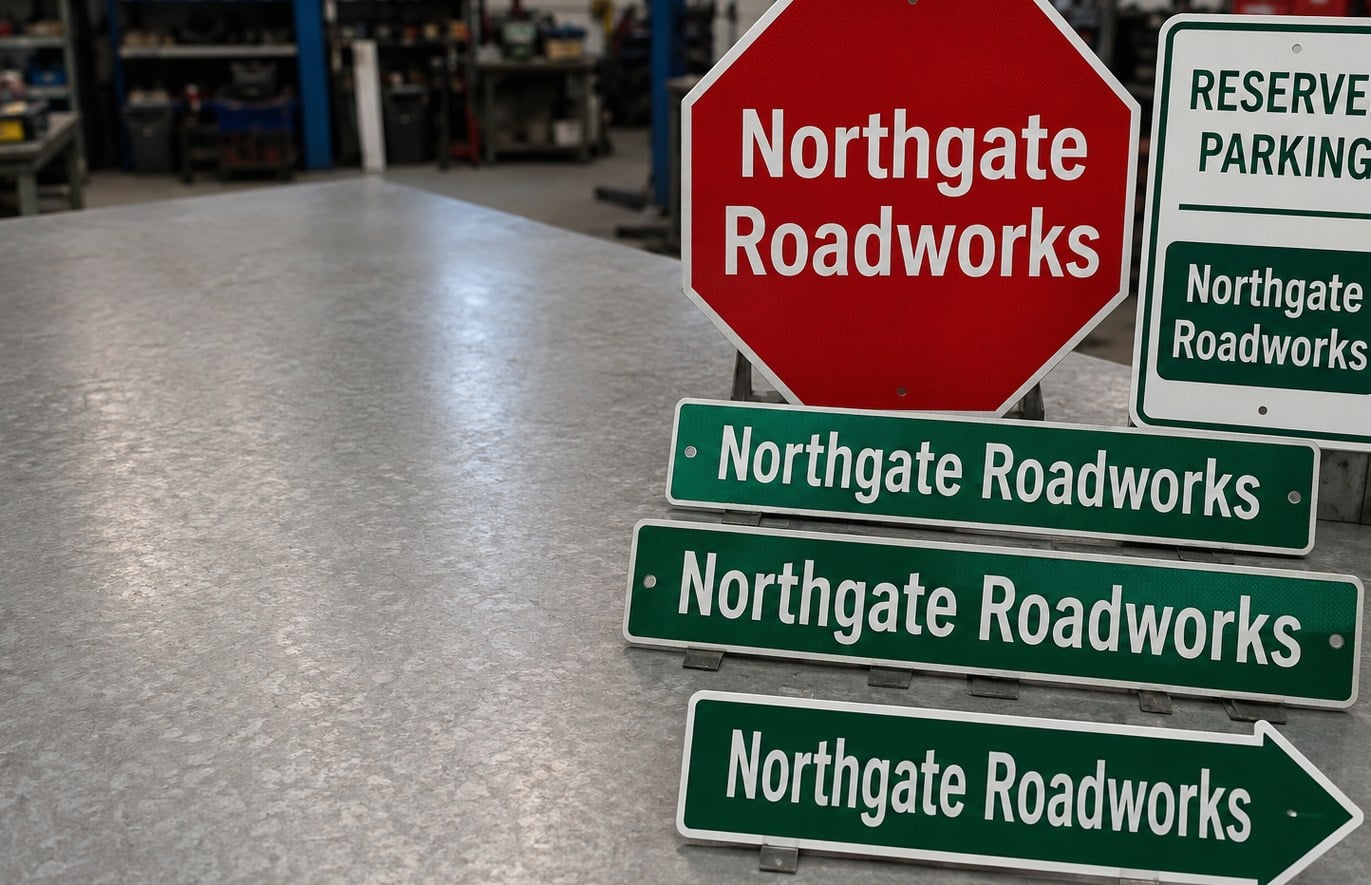
- Clean reflective street signs with mild detergent, water and a soft cloth; never abrasives or solvents.
- Inspect every street sign at least once a year in daylight and once at night.
- Faded, peeling or bent reflective faces are replaced, not repaired.
- Replacement blades match saved artwork; minimum order 12, mockup within 24 hours, about 2 weeks production.
How long do custom street signs stay readable, and what shortens their life?
Custom street signs stay readable for many seasons when the reflective sheeting is kept clean, the blade stays flat and square to traffic, and nothing scrapes the face. The sign rarely fails all at once. Street signs lose legibility gradually through grime, sun on one face, branches rubbing the sheeting, and brackets that loosen until the blade turns away from drivers.
The biggest factors are ones a community controls after install day:
- Dirt and film. Road spray, pollen and tree sap dull the reflective face so headlights return less light.
- Physical damage. Mowers, trucks, ladders and vandalism scratch or bend blades.
- Vegetation. Limbs and hedges hide the name and rub the face in wind.
- Loose hardware. A twisted blade is effectively missing, even if the sign itself is perfect.
- Harsh cleaning. Solvents, abrasive pads and close-range pressure washing can strip the very layer that makes the sign reflective.
The sheeting grade you choose at order time sets the starting point. The comparison of engineer grade vs high-intensity prismatic street signs explains how each grade performs; this guide covers keeping either grade working.
How should you clean reflective street signs safely?
Clean reflective street signs with plain water, a mild detergent and a soft cloth or sponge, then rinse with clean water. Work from the top of the blade down, wipe gently in one direction, and never scrub the face with abrasive pads, brushes with stiff bristles or household solvents. The goal is to lift grime off the sheeting without scratching or softening it.
- Rinse loose dirt and grit off first so it does not scratch the face during wiping.
- Wash with a mild, non-abrasive detergent mixed in water.
- Wipe with a soft cloth, sponge or soft-bristle brush, using light pressure.
- Rinse thoroughly so no soap film is left to attract dust.
- Let the street sign air dry, or blot with a clean soft cloth.
If a garden hose is not enough and a crew wants to use a pressure washer, keep the wand well back from the sign, use a wide spray pattern and aim at an angle rather than straight into the edge of the sheeting. A tight jet aimed at an edge can lift the reflective film off the aluminum.
Tree sap and bird droppings are easier to remove when softened first. Lay a wet cloth over the spot for a few minutes, then wipe. Avoid scraping with a blade or fingernail, which leaves a dull scratch that never reflects evenly again.
How often should a community inspect its street signs?
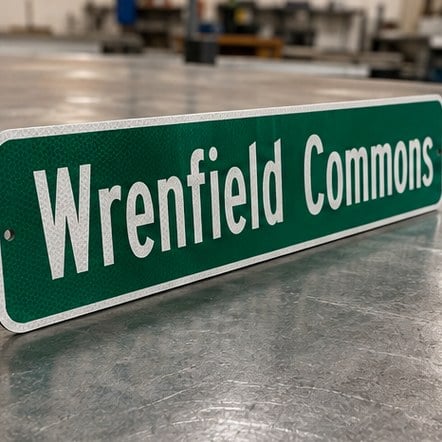
Inspect every street sign at least once a year in daylight and once at night, and walk the route again after any major storm. A short, repeatable inspection catches twisted blades, faded faces and blocked signs before residents, delivery drivers or emergency crews notice a missing street name.
A simple inspection sheet keeps the review consistent from year to year. Use the same intersection list you built for the original order so every blade has a line.
| Check | What to look for | Typical fix |
|---|---|---|
| Daytime legibility | Name readable from the approach lane, colors even on both faces | Clean, or flag for replacement if faded |
| Nighttime reflectivity | Letters glow clearly in headlights from a normal driving position | Clean first, then compare with a fresh sign |
| Orientation | Blades square to the street they name, not rotated | Re-tighten or replace the bracket |
| Mounting height and clearance | Blade clear of mirrors on trucks and tall vehicles | Adjust the post or bracket position |
| Visibility | No limbs, hedges, banners or new signs blocking the name | Trim or relocate the obstruction |
| Damage | Bends, dents, peeling edges, graffiti, bullet holes | Clean, repair hardware, or reorder the blade |
Record the result for each sign and keep the sheet with your sign list. Over a few years, the sheet shows which corners take the most abuse and which blades to stock as spares.
What should you do when a street sign is faded, bent or vandalized?
Replace a street sign when the face is faded, peeling, cracked or bent enough that the name no longer reads cleanly; clean or re-tighten it when the face is intact but dirty or turned. Reflective sheeting cannot be restored once the reflective layer is worn, scratched through or delaminated, so a damaged face is a replacement job, not a repair job.
Common cases and the usual response:
- Uniformly dull face. Clean it properly first. If the sign still looks weak beside a newer blade at night, put it on the reorder list.
- One face faded, the other fine. Sun exposure is uneven on double-sided blades. Replace the whole blade so both directions match.
- Bent blade. Straightening an aluminum blade often cracks the sheeting along the bend. A replacement usually looks and reflects better.
- Graffiti. Try mild detergent and a soft cloth first. Strong paint removers can damage the sheeting, so test any cleaner on a hidden corner or a spare.
- Stickers and added decals. Peel slowly and remove residue gently. Do not let volunteers add their own labels to the face.
Because every blade on your original list was built from saved artwork, a replacement can match the rest of the street. Send the street name and blade details to the quote page and Get Custom Street Signs returns a mockup within 24 hours.
How do weather and location affect street sign care?
Street signs in harsh locations need more frequent cleaning and inspection, not different signs. Coastal salt, winter road treatment, heavy pollen, desert dust and constant sun all speed up the buildup or wear that dulls a reflective face. Matching the inspection schedule to the location keeps every street name equally readable across a property.
- Coastal and lakeside communities. Salt and moisture film the face and corrode cheap hardware. Rinse signs with fresh water more often and check brackets for rust.
- Snow regions. Plow spray coats low blades and plows can clip posts. Check orientation each spring and rinse off road residue.
- Wooded or garden communities. Sap, pollen and leaf stains build up quickly, and branches grow into sight lines every season.
- Sunny, open sites. The sun-facing side of a blade weathers first. Note which faces fade sooner and plan replacements by face.
- Campgrounds and RV parks. Tall vehicles and slide-outs strike low signs. See the guide for street signs for RV parks and campgrounds for placement ideas.
Tell Get Custom Street Signs where the signs will stand when you request a quote. The location helps decide the sheeting grade and whether single-sided or double-sided blades make sense for each corner.
Which choices at order time make street signs easier to maintain?
The easiest street signs to maintain are the ones specified for their location from the start: the right sheeting grade, the right face count, mounting hardware that suits the post, and artwork saved so any blade can be reordered to match. Small decisions in the original order reduce cleaning, guesswork and mismatched replacements for years.
- Pick the reflective grade by speed and lighting. Darker roads and faster traffic benefit from a brighter grade.
- Keep the design simple. High-contrast lettering and a clean logo stay legible longer as the face ages. The logo street signs page shows how emblems sit on a blade without crowding the name.
- Match face count to the corner. A blade seen from both directions needs two good faces; one seen from a single approach does not.
- Order a few spares. Spare street name blades for the busiest or most-damaged corners let a crew swap a sign the same day.
- Store spares flat and covered. Keep them in their packaging, face to face with protective sheets, away from heat and sharp objects.
- Keep a master sign list. Record each blade’s name, location, colors, grade and face count so reorders are exact.
Get Custom Street Signs keeps approved artwork on file, so a later reorder starts from the same design. The minimum order is 12 signs, and every sign in the batch can carry different text, which makes it practical to group a year of replacements into one order.
How should an HOA or facilities team build a street sign care routine?
A street sign care routine works best when one person owns it, the schedule is written down and replacements are batched. Assign the inspection to a property manager, maintenance lead or volunteer committee, tie it to dates the team already uses, and keep a running reorder list so damaged signs are replaced together instead of one at a time.
- Name an owner. One person keeps the sign list, the inspection sheet and the reorder list.
- Set two fixed walks a year. One daytime and one nighttime inspection, plus a check after big storms.
- Schedule cleaning with landscaping. Crews already trimming hedges can rinse and wipe blades on the same visit.
- Batch replacements. When the reorder list reaches a dozen signs, request a quote; that meets the minimum of 12.
- Approve once, install promptly. The mockup arrives within 24 hours and production takes about 2 weeks, with faster turnaround available through express shipping.
For a full order walkthrough, see how it works. Get Custom Street Signs offers unlimited free revisions, and you pay nothing until you approve the design.
Frequently asked questions
Can pressure washing damage reflective street signs?
Pressure washing can damage reflective street signs if the jet is too close or aimed at the edge of the sheeting, where it can lift the film off the blade. Use a wide spray pattern, keep the wand well back and work at an angle. For most dirt, a garden hose, mild detergent and a soft cloth clean the sign safely without any risk to the reflective face.
Which cleaners should never be used on street signs?
Street signs should never be cleaned with abrasive pads, scouring powder, stiff wire brushes or strong solvents such as paint thinner, which can scratch, soften or cloud the reflective sheeting. Mild detergent in water with a soft cloth or sponge handles nearly all road grime and pollen. Get Custom Street Signs suggests testing any stronger cleaner on a spare blade before using it on installed signs.
How can I check whether my street signs still reflect well at night?
Street signs are easiest to judge at night from a vehicle in the normal driving lane with low beams on. Drive each approach and note any name that looks dim or patchy. Clean those signs first, then compare them with a new or spare blade. If a cleaned sign still looks clearly weaker, add it to the reorder list for replacement.
Why does one side of a double-sided street sign fade before the other?
A double-sided street sign usually fades unevenly because one face gets more direct sun, rain or road spray than the other. The sun-facing side weathers first in open sites. When one face fades noticeably, replace the whole blade so both directions read the same, and record which corners fade sooner so future orders can plan for them.
Should a bent street sign be straightened or replaced?
A bent street sign is usually better replaced than straightened, because bending aluminum back into shape often cracks or creases the reflective sheeting along the fold. The result can look uneven in headlights. Get Custom Street Signs keeps approved artwork on file, so a replacement blade matches the original name, colors and logo without starting the design over.
What is the safest way to remove graffiti from a street sign?
Graffiti removal from a street sign should start with the gentlest method: mild detergent, water and a soft cloth, with patience on stubborn spots. Harsh paint removers can strip or cloud the reflective face, so test any stronger product on a hidden corner or spare blade first. If the paint will not come off without damage, replacing the blade is the cleaner fix.
How do trees and hedges affect street sign maintenance?
Trees and hedges affect street signs by blocking the name from approaching drivers and by rubbing the reflective face in wind, which scuffs the sheeting over time. Add sign corners to the landscaping crew's trimming list and walk each approach after the growing season. Keeping sight lines open does as much for street sign visibility as cleaning the face itself.
Do street signs near the ocean need special maintenance?
Street signs near the ocean need more frequent freshwater rinsing because salt spray leaves a film that dulls the reflective face and corrodes lower-quality hardware. Check brackets and fasteners for rust during each inspection and replace any that are weakening. Get Custom Street Signs can note a coastal location on the quote so the sheeting grade and face count suit the site.
How should spare street signs be stored until they are needed?
Spare street signs should be stored flat in their original packaging, in a dry, covered space away from heat and sharp tools. Stack blades face to face with protective sheets between them so the reflective surfaces never rub. Label each spare with its street name and location from the master sign list, so a crew can find the right blade quickly.
Can residents put stickers or decals on community street signs?
Community street signs should not carry resident stickers or decals, because adhesives can damage the reflective face and added graphics make the street name harder to read. Removing old stickers takes slow peeling and gentle residue cleanup. If a community wants an emblem on its blades, Get Custom Street Signs can add the logo to the artwork so it is built into every sign.
Who should be responsible for maintaining street signs in a private community?
Street sign maintenance in a private community works best with one named owner, often the property manager, maintenance lead or a board-appointed volunteer. That person keeps the master sign list, runs the yearly inspections and collects damaged blades onto a reorder list. Batching replacements into one order of 12 or more keeps every new sign consistent with the existing street.
Get a free mockup for your street signs
Send your logo or idea and the quantity you have in mind. Get Custom Street Signs returns a free mockup within 24 hours, you approve the design before anything is produced, and standard turnaround is about two weeks with faster options available. Get a custom quote.